Music Monday: Dancing Queen by ABBA from 1976
Posted By RichC on July 16, 2018
This content is restricted.
Posted By RichC on July 16, 2018
This content is restricted.
Posted By RichC on July 15, 2018
Like most who spend their days using smartphones, tablets and computer devices, I’m prone to making typos along with various written communication mistakes. If you’ve read my blog a few times, you will undoubtedly notice mistakes, even if you have an untrained eye — that is because I rarely proofread.

I’ve been criticized by everyone from my wife to annoyed professionals who believe if something is "published to the public," it should be as mistake free as possible. I agree, that would be nice. I’ve debated this over the years with close friends and wonder if I should spend a little more time proofreading blog posts … as well as the quick email communication or text messaging in order to pass along information (more recently social network Tweets). After giving it a little effort, I end up with the conclusion that so long as the "intended thought" is efficiently communicated, I’m not going to waste additional time to reread or rewrite. Still, I hate being criticized and know is show a lack of professionalism (and laziness) when I should be spending a few extra minutes reviewing and correcting typos and at leas a few of the grammatical errors.
Is there is a right or wrong protocol for personal personal written communication? If it is to spend more time proofing than writing, I would likely not post as often? Some, like me argue that "communicating" is the "art of conveying information" and so long as it is clearly understood, the act is successful. Other like my wife say that it is a poor reflection on my professionalism and role as a "semi editor" when it comes to work my company publishes. Hm, she sounds correct too. As for business communication, I do put a little more effort into correcting writing, even if I still personally find it hard to devote the time on something glanced at once or twice if I’m lucky.
I tend to fall back on the original purpose of journaling — my "private paper journal" was started to make me more comfortable with 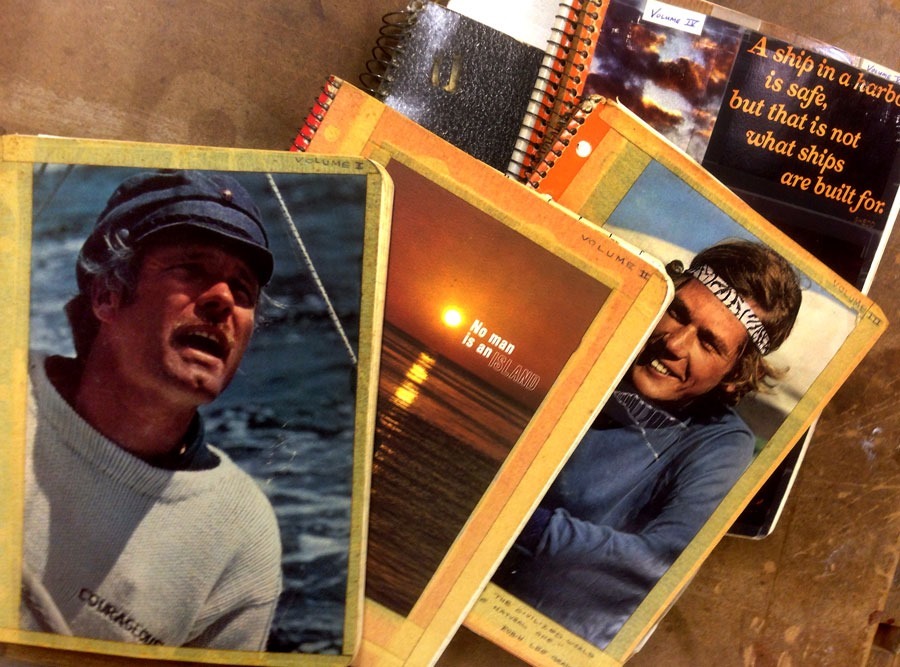 "communicating through writing." The paper journal (40 years ago) has long given way to a daily "blog" but the writing still serves my initial purpose — write something down daily … a thought, idea, rambling letter or anything … and it will make you a better written communicator. For me, having to proofread my desultory thoughts or even Tweets, would mean spending time rereading or rewriting … and this would defeat the purpose (and reduce my ambition to write/type.) If I spent more time each day reviewing, it would become a chore and would be too easy to stop. So for those who tell me "you make too many mistakes," I’ll make a blanket apology and let you know that your critique was heard … and I will continue to try to improve.
Posted By RichC on July 14, 2018
 It was a great week of skywatching in our backyard in Cincinnati this week. The sun magnificently lit up planets, especially Saturn and Jupiter while Mars, Venus (the brightest) and Mercury (doubtful) remained a bit low in the sky while I was out viewing. I was purposely out for Mars, but it will have to wait for another night. "Mars is rapidly approaches Earth at an average rate of 210,000 miles per day. It nearly doubles in brightness through July and by month’s end will be at its biggest and brightest for the next 17 years." – LINK
I don’t recall ever being able to see Jupiter (photo left) so clearly with the naked eye or to ever be able to have it show up well on an iPhone photo (click photo for larger view)?
Here are also a previous posts:
1) iPhone7plus photo of the moon,
2) a Supermoon photo when in Florida and
3) the Lumix time-lapse of the Solar Eclipse in 2017.
Posted By RichC on July 13, 2018
 Apple has been updating their iOS iPhone and iPad mobile operating system regularly and they seem to take far longer than in the old days (a couple years ago – HAHA). This latest update will not be appreciated by law enforcement who often want to gain access to data on a suspects phone. This recent iOS 11.4.1 release is not the iOS 12 most are anxious about, but just a small update with a security feature called USB Restricted Mode.
Apple has added protections against the USB devices being used by law enforcement and private companies that connect over Lightning to crack an iPhone’s passcode and evade Apple’s usual encryption safeguards.
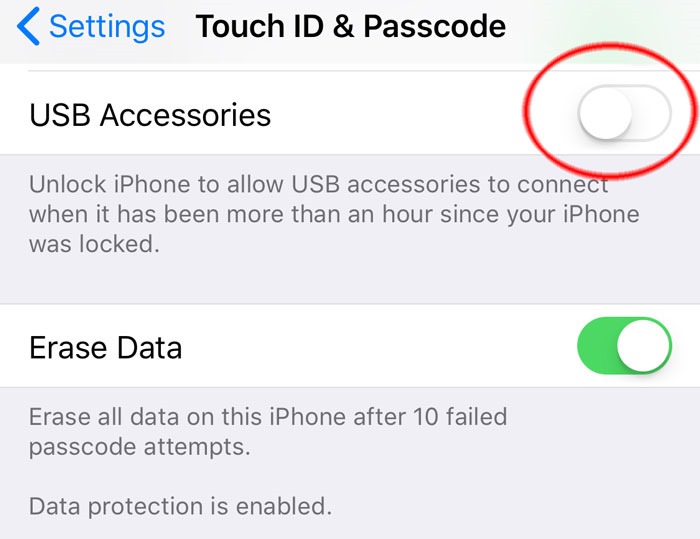
If you go to Settings and check under Face ID (or Touch ID) & Passcode, you’ll see a new toggle for USB Accessories. By default, the switch is off. This means that once your iPhone or iPad has been locked for over an hour straight, iOS will no longer allow USB accessories to connect to the device — shutting out cracking tools like GrayKey as a result. If you’ve got accessories that you want to continue working after your iPhone has been sitting locked for awhile, you can toggle the option on to remove the hour limit.
Apple’s wording is a bit confusing. You should leave the toggle disabled if you want your iPhone to be most secure.
Posted By RichC on July 12, 2018
 While adding a photo to a post about Katelyn, Drew and Annalyn on Put In Bay earlier this week, I had a few more from our pre-kid days that might make for a good Throwback Thursday #TBT post. So here are a couple more sailing on Lake Erie from 1985 aboard Brenich our Baba 30.
 A couple are from the north cove on Kelley’s Island, a couple from Put In Bay and a few more below sailing to and from.
Posted By RichC on July 11, 2018
This content is restricted.
Posted By RichC on July 10, 2018
This content is restricted.
Posted By RichC on July 9, 2018
This content is restricted.
Posted By RichC on July 8, 2018
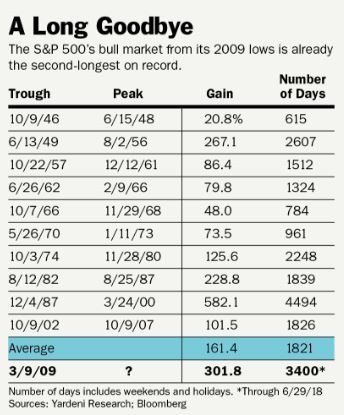 As the current bull stock market gets long in the tooth (average is 7 years, we’re now closing in on 9 years), financial analysts are beginning to write regularly about preparing for the next slowdown. Few are declaring it over at this moment, but most advise prudence as it comes to what investments are being held.
A couple articles I’ve been looking at point to the #TariffTiff (I like that term) that seems to be part of President Trump’s negotiation with U.S. trading partner countries as leverage. Depending on your point of view (pro or anti-Trump), you either think he is using tariffs to gain leverage or is foolishly willing to see things escalate into a #TradeWar believing the U.S. ends up winning — personally just as with any war, there will be casualties on both sides. Hopefully cooler heads will prevail and the U.S. will just end up with "fairer" trade deals in the end?
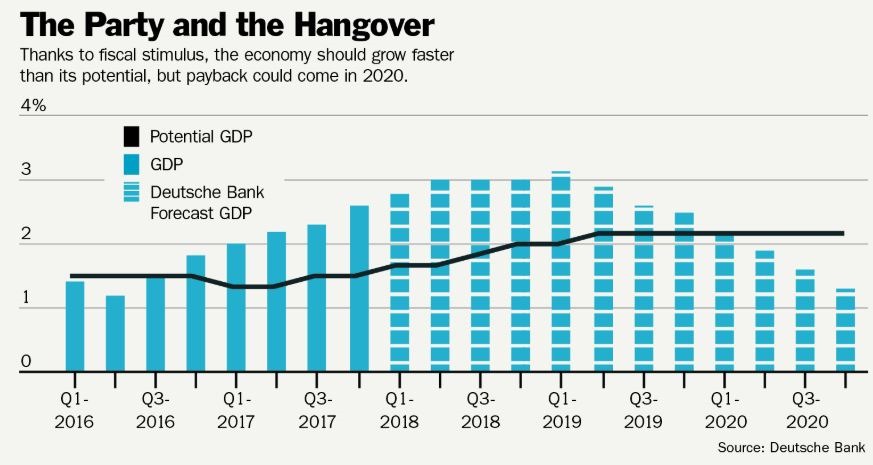
 Back to predicting the end of the bull market. Barron’s in their June 30, 2018 article points out that "the economy has been juiced by the tax cuts and fiscal-spending package that Congress passed at the end of 2017—a stimulus that should last another year or so." As interest rates rise and the Fed shrinks its $4 Trillion dollar balance sheet, the economy will no longer have the stimulus. "Put them together and you have a drag big enough to slow the economy, while stamping a bright expiration date on the bull market: 2020."
And it isn’t just permabears who are gloomy of late. Ben Bernanke, the former chairman of the Federal Reserve, recently said that after two years of stimulus, “in 2020, Wile E. Coyote is going to go off the cliff and is going to look down.”
Even less-pessimistic economists and market watchers acknowledge that economic expansion will slow in 2020, while corporate profits, though still increasing, will do so at a slower pace than they had previously. Global economic growth could also feel the pinch if the European Central Bank begins raising interest rates toward the end of 2019, as it has suggested it might. These conditions are far different than what has existed in the bull market.
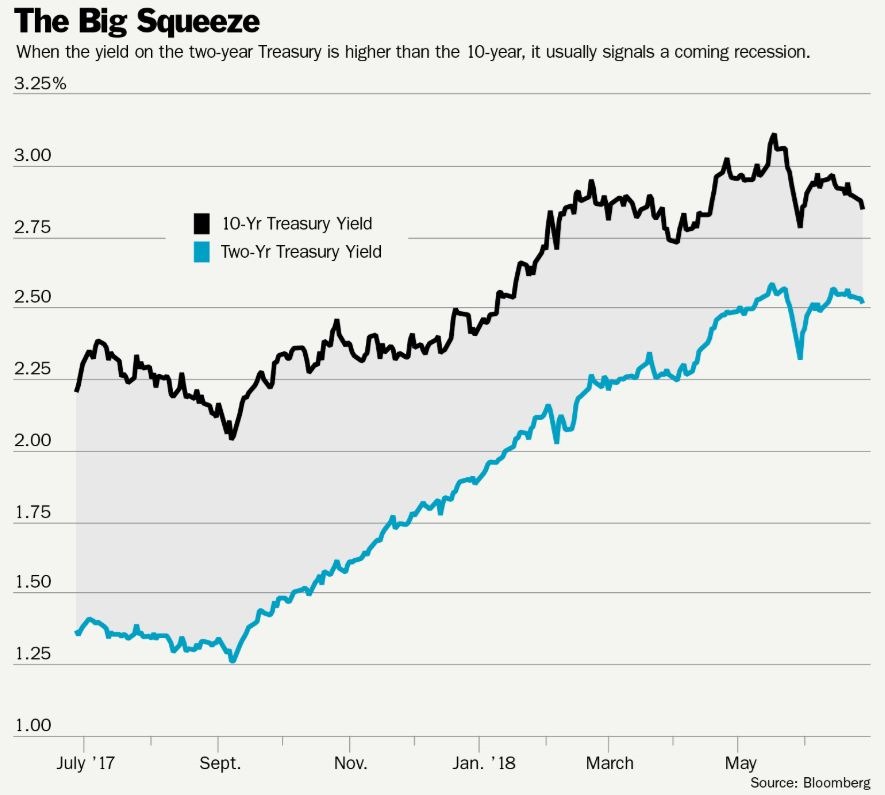
Much of the talk in economic circles is in regard to an accurate "predictor" of bear market — that being an inverted yield curve. We are not there yet, but the convergence of short term and long term treasuries has moved much closer. Barron’s gave a good explanation:
In good times, the longer-term yield should be higher than the shorter because it means a bank can borrow at the lower short-term rate and make money lending at the higher longer-term one. When short-term yields rise above long-term ones, there’s no incentive to lend, and that “inverted yield curve” has typically preceded a recession by six to 24 months.
So … now that we know the end is closer than it was and that we are currently in a #tradetiff, how do we prepare for the inevitable slowing of the economy … if not a steep market drop leading us into a recession? Traditionally investors shifted to bonds for safety along with precious metals. Neither seems to be attractive at the moment, even if adding them steadily to a portfolio might be wise. CNBC published a article recommending U.S. based utilities or sector ETFs like $XLU. The thinking is that steady dividend income and protection from a #TradeWar could be had with utilities. Another recommendation would be the traditional defensive stocks that are domestic and consumer oriented — I’ve been adding $PG and $CVS, but am concerned their exposure worldwide could be a negative?

The best advice is to at least start thinking that the party will end and invest new money with caution. Perhaps consider CALL options as a way to at least protect stocks you aren’t quite ready to sell (just my thoughts)?
Posted By RichC on July 7, 2018
When this is our Butler County sheriff on the 4th of July …
… I know that I am living in the correct Ohio county!