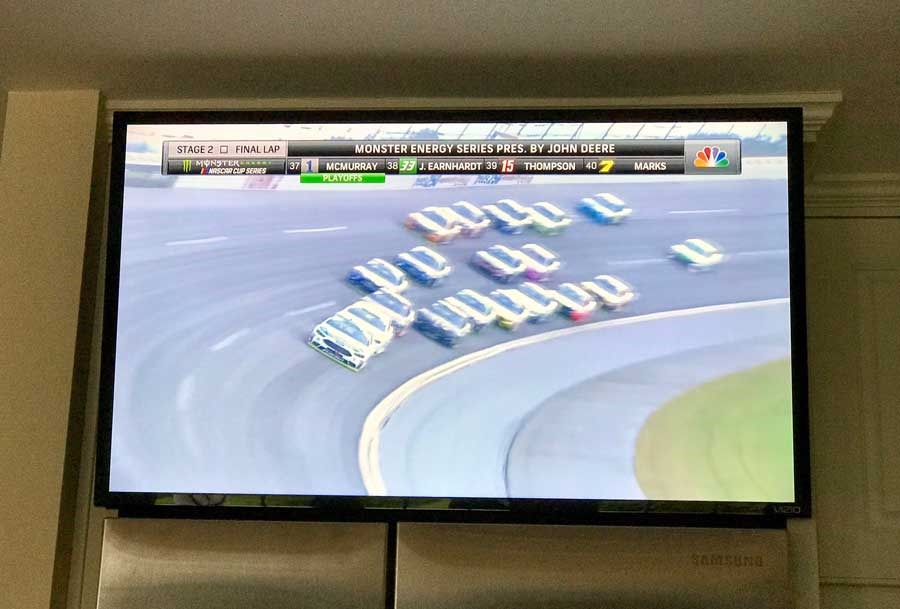
Disappointed to be still NOT watching NFL football on Sunday afternoon (week 6), but for the most part there are plenty of autumn chores to keep me busy. Unfortunately the rain came this afternoon and while grabbing a snack at the new kitchen counter, flipped to NASCAR just as I did last weekend. It is not the same as watching football, but at least the drivers, teams and NASCAR organization demonstrate the appropriate respect for out flag and national anthem.
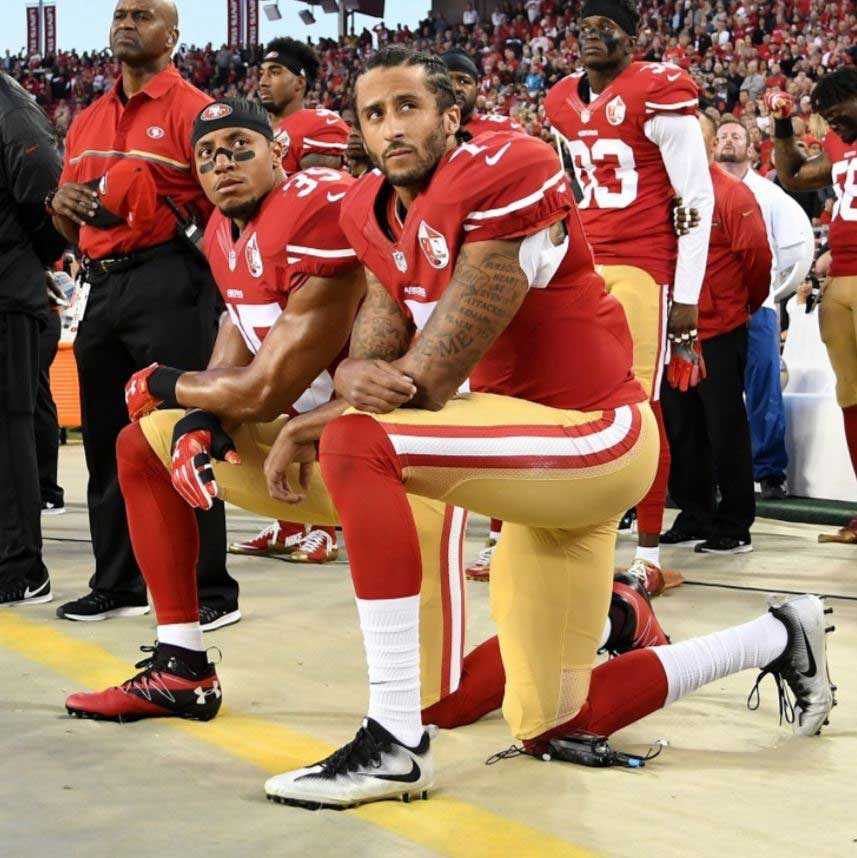
Although some argue that the first amendment gives citizens the freedom to protest and in this case disrespect those who wear the uniform (or those who have sacrificed for this country), it also offends many who are disgusted with players picking the national anthem and following Colin Kaepernick’s stunt as the time to protest (not to mention his reason). Unfortunately for the NFL, sponsors, networks and players, they will in turn eventually feel the consequences of fans tuning out. I had thought by now the cooler heads of owners and management would have come up with a solution?
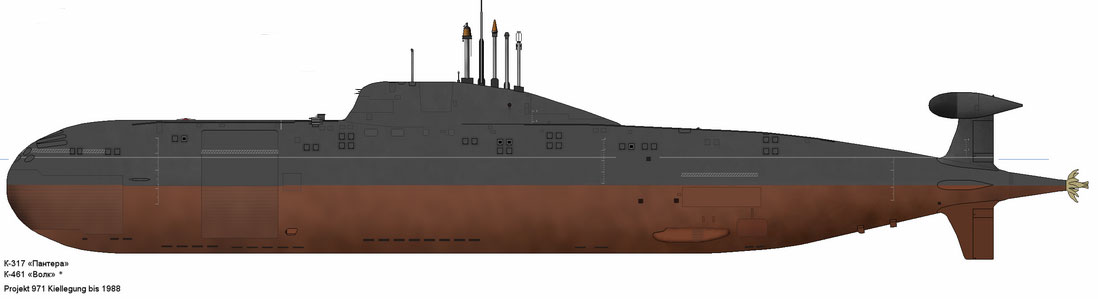
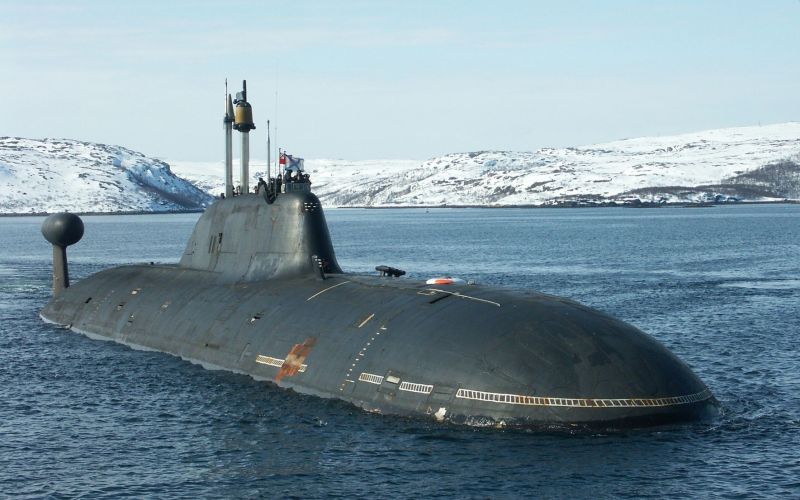
In late 1984, when the first Akula submarine of the Soviet Navy put to sea, it immediately changed the way anti-submarine warfare would be conducted. With the Akula’s arrival the American submarine fleet would no longer enjoy the dramatic undersea advantages they had possessed since the end of the World War II. The Akula, which is Russian for shark, stunned NATO with its high-level of stealth, especially compared to any Soviet submarine before it.
That’s because in the battle for undersea supremacy, silence is the key to survival and victory. Prior to the Akula, the Soviets had already been making huge strides, making their submarines faster, deeper diving, and more heavily armed than American submarines. One submarine, the lone Papa SSGN, a nuclear-powered guided-missile sub, is still the world’s fastest after reaching 44.7 knots (around 51 mph) in 1970.
But the ability to make their submarines as quiet, or nearly as quiet, as American subs had long eluded them. The Akula dramatically changed that. Or, as William Perry—who would later become Secretary of Defense—told a House Armed Services Committee in 1989, “The free lunch was over.”
The early 1980s were challenging as manufacturing headed overseas, inflation ate up the buying power of every dollar and the cost to borrow was at an all time high. In fact, Brenda and I were giddy to have acquired a 12% mortgage on our first house in 1982 because our friends were applying for new mortgages at 18-21%. For us though, times were pretty good, mostly because we didn’t know any better. Both of us had finished college and were starting our careers; we were still driving inexpensive cars and living like college kids. Our dates nights consisted of the $1 cheapo movie theater in downtown Kent, Ohio (a college town) … or maybe free tickets to the Cleveland Orchestra either downtown or at Blossom Music Center. A meal out meant getting a burger, salad, fries and Coke all for $1.99 deal at the Red Barn in Streetsboro. Even after our little Aurora, Ohio houseand crazy boat payments, we were able to comfortably able to save money and invest those dollars in high interest money market savings or the recently discovered promise of growth in the stock market … growth … which it did, until it didn’t.
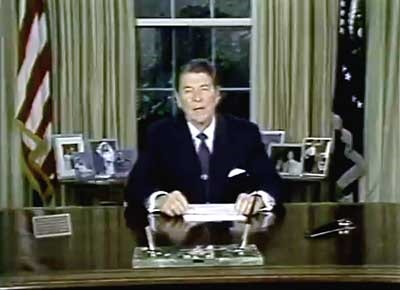
Those high returning years seemed to be just the way markets were suppose to go for newbies who were saving money in order to expand a home evening printing business (I was rebuilding and running printing presses in my garage and basement). Eventually I opted to leave my job (rather than move) and took the risk to start my own company. Once committed, I bought and remodeling a commercial building, so the next big step was to use the money we had invested to make capital purchases and hire employees after the encouragement from President Reagan believing in America and pitching tax reform (listen to his speech). Lower taxes and business friendly reform stimulated business and the economy – all wanted to be entrepreneurs. American businesses were finally going to be able to grow and compete … the risk was finally worth taking. America was back!
So step two was for Brenda and I to head to the Graph Expo at McCormick Place in Chicago that autumn of 1987 in order to place the order on a new 2-color press and miscellaneous equipment. We check our investment savings, loved seeing it continue to grow, and were ready to go … until we weren’t.
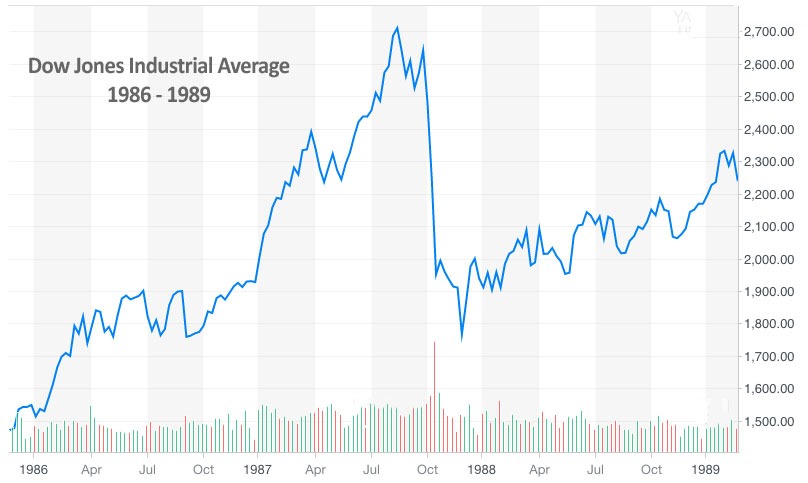
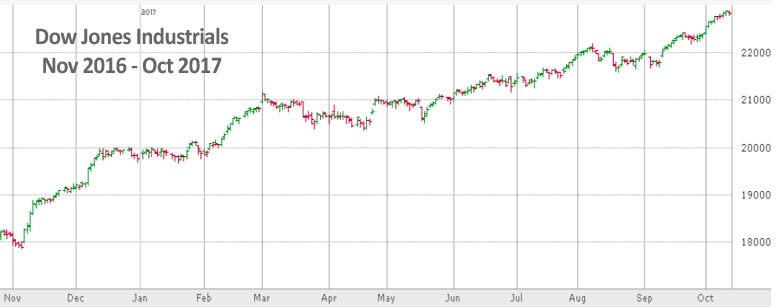
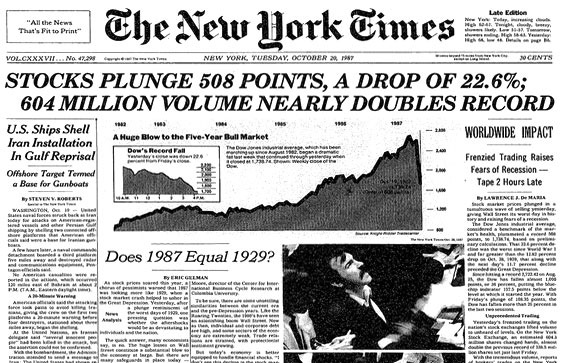
BUT … those of use who remember the tax reform of 1986 followed by Black Monday in October of 1987 … are a tad bit hesitant about going all in. Markets don’t always respond as we expect, as I recall. In fact, the stock market lost 22% in one day and wiped out a full year of gains plus the losses on the new money we had put to work in equities. Should we learn a lesson from this history, or as some would say, "it’s different this time." It always is, until is isn’t.
Although I’m the last person to criticize folks for tweaking their diesel engines for performance and efficiency, I cringe when I see modifications that purposely over fuel and pump a bunch of black smoke when it is unnecessary (not under load). There has to be a commonsense balance between neutering diesel engines with excessively costly complex systems and “rolling coal.”
Rolling coal is the practice of modifying a diesel engine to increase the amount of fuel entering the engine in order to emit large amounts of black or grey sooty exhaust fumes into the air. It also may include the intentional removal of the particulate filter. Practitioners often additionally modify their vehicles by installing smoke switches and smoke stacks. MORE on Wikipedia
While trying to keep the raccoons from “moving in” as the weather cools, I’ve been a little too successful recently. The past weeks score has been 2 raccoons, 2 opossums and a cat (second time for feral cat). This guy sure can jump!
I was going to comment that we’ve seen an increase in number of critters since Tootsie died, but as I recall, she was always proudly bringing something home too. Between deer rutting and damaging our trees, skunks in my traps and coyotes bounding through the neighborhood, I suppose trapping another feral cat shouldn’t be too surprising?
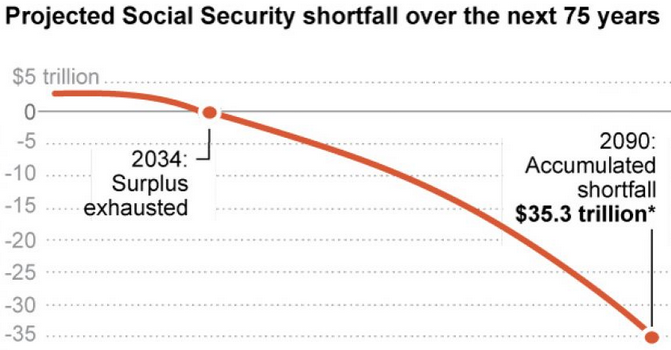
A friend of mine is receiving his first social security check this month and so I’ve been doing some reading on the subject (it is a long way off yet for me … just in case readers had me already over-the-hill!) One of the biggest concerns for those nearing retirement and doing calculations is that Social Security may not be there. I have to admit, it is definitely something I think about since the retirement age has already moved up from 65 to 67 and to make matters worse, Brenda and I are at the tail end of the boomers which will likely see social security surpluses exhausted. Will there be enough workers willing to pay "extra" into the system to keep checks flowing as we are planning for now?
Contrary to the belief that workers and employers pay into a "trust fund" where your FICA withholdings is put in a "lock box" for retirement (sort of like personal retirement accounts), the reality is that about 85 cents of every dollar goes to supporting current retirees. The additional 15 cents of every dollar is then used by the federal government and replaced with an IOY special-issue Treasury bond. In other words, all money paid into the system is spent. Social Security is a "pay-as-you-go" system. So those of us paying in now, depend our our children and grandchildren to keep paying in "at high enough rates" to support those of us looking nervously forward to retirement.
Obviously there are a few at the tail end of productive working who will not survive without the system and plenty "planning" for or currently paying their expenses with social security checks. The current and soon to retire are a very large group and all coming onto the system and all planning for their Social Security and Medicare – let’s not go there right now (YIKES). The positive is that the Boomers (born between 1946-1964) aren’t the largest generation contrary to conventional thought. There are actually 15 million more in the Millennial Generation (Gen-Y), born between 1981-1997. If combined with Gen-X, between 1965-1980, then there are actually enough continuing to pay payroll taxes for the long term to support social security. Also, here is where expanding the legal immigration can really help out (especially young immigrants and perhaps the Dreamers … food for thought if you struggle with how to handle the 12 million or so illegals).
That’s not to say Social Security is solvent. Far from it, but politicians and those who vote will have to address the funding crisis soon. One way or the other, we’ll need to come up with an equitable way to keep the system going, unless we are so far gone that Soylent Green becomes a reality?
This is the year 2022. Overcrowding, pollution, and resource depletion have reduced society’s leaders to finding food for the teeming masses. The answer is Soylent Green (a 1973 Charlton Heston movie).