Our culture has accepted two huge lies … a Rick Warren #quote

Posted By on August 4, 2019

RickWarren_Culture

Rick Warren has one of the more fitting quotes for our current cultural divide:

“Our culture has accepted two huge lies. The first is that if you disagree with someone’s lifestyle, you must fear or hate them. The second is that to love someone means you agree with everything they believe or do. Both are nonsense. You don’t have to compromise convictions to be compassionate.”

Kitchen Ideas when you would rather be on a boat

Posted By on August 3, 2019

A filler photo tidbit for today’s post, but this creative kitchen island idea from one of my sailing groups caught my eye. It “would” have worked in our kitchen … I’m just not sure I could have pulled it off without adding a mast! 🙂

Tech Friday: How safe is data with cloud storage services?

Posted By on August 2, 2019

32038-54426-000-lead-NSO-Group-l

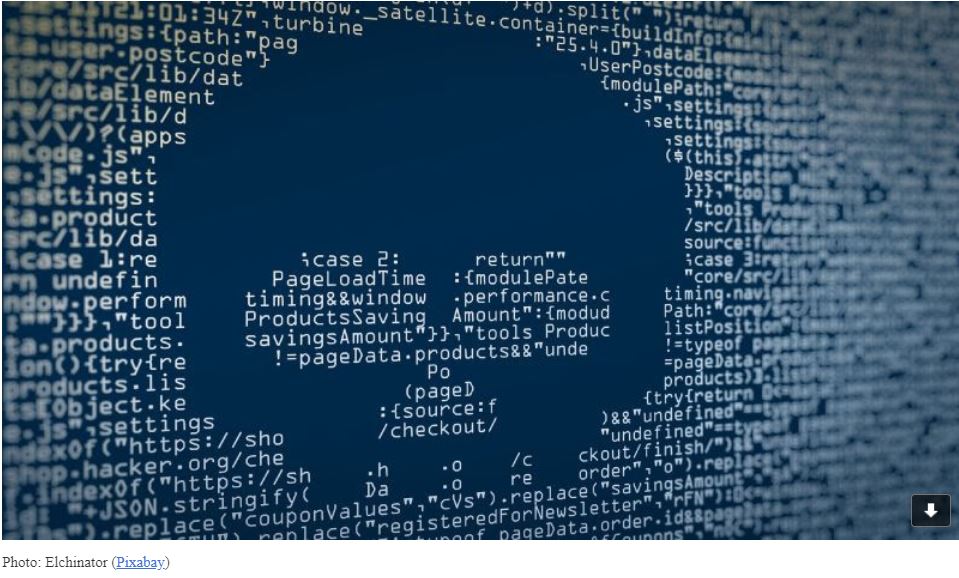
Even if you don’t regularly using cloud storage services (likely your smartphone is), most of us are at some point backing up data from our computers or using services online that store our data on major cloud storage companies.

 IMG_4402I’ve personally had a growing concern over the race for quantum computing which eventually will make our current encryption insecure (posts 1, 2, 3). Last week a well known Israeli spyware company claims its Pegasus malware can covertly retrieve all of the information that person has stored on servers owned by Apple, Google, Microsoft, Facebook and Amazon. (LINK) 

Hm … so what’s the plan?

Volkswagen is winning us back and easing bounteous warranty

Posted By on August 1, 2019

cincitdi_050820gtg600w
CinciTDI GTG at our house August 20, 2008 – Throwback Thursday #TBT

It has been a while since posting anything on Volkswagen or to the TDIClub forums; I’m likely I’m still sore over their “dieselgate” failure and the company VWAtlasTimH190724giving up on diesel cars in North America. Still, I’m drawn to VWs and their excellent combination of tight handling, performance, design and premium quality all at a “fair” price … and can see myself interested in a Volkswagen Atlas someday (my friend Tim Hunter just added one to his garage). 

Even though I have moved on from the Volkswagen family, my daughter returned, missing her VW TDI. It only took a short time of owning a Nissan Juke (she was very disappointed) and is now very happy with her Tiguan (2017 video below break). My son is also about ready to return to a Volkswagen and might be tempted to move even quicker in order to get in before the excellent 6-year/72,000-mile warranty is gone. Time will tell … but personally I’d rather have the long bumper-to-bumper warranty than the free factory-covered maintenance. 

VW’s excellent 6-year/72,000 mile warranty is ending

A free maintenance plan is introduced in its place

2018_Golf_GTI-Large-7574

The very good 6-year/72,000-mile bumper-to-bumper warranty for all new Volkswagens is coming to an end. Automotive News discovered the news, learning that a new warranty would be put in place for all Volkswagens for the 2020 model year. That new program brings the coverage down to a 4-year/50,000-mile bumper-to-bumper warranty, which is still a solid new car warranty in the U.S.

Along for the ride with the new warranty strategy are two years of free, factory-covered maintenance for all 2020 VW owners. That means you shouldn’t have any out-of-pocket scheduled maintenance costs for the first two years of ownership. If you end up blowing a tire or bending a rim, though, expect to cough up some cash.

FULL Autoblog.com post

(more…)

When surfing or on a SUP, a dolphin can be a bully too

Posted By on July 31, 2019

Dolphins and humans have a few things in common – there are bullies in both species.

Falling back on fiberglass and autobody skills for house repairs

Posted By on July 30, 2019

The summer of 2019 around our house has meant more repairs and maintenance updates than usual. This means weekends have been busy with house projects and in also finding and hiring help to complete the updates that are too overwhelming for this one “aging” guy to handle on his own RichPoolhouseRepairing190728(although my 60th birthday celebrations 1 and 2 have been great!).

In the spring of this year, a windstorm tossed the Trinka into the column on the end of our poolhouse putting a hole and crack in the fiberglass pillar. In contemplating a “fix,” I decided to take care of the structural damage using “boatbuilding” fiberglass and West System epoxy. Having just installed new gutters and since we are close to painting all of the house trim, I’m in more of a hurry to scrap and sand all the flaking paint off the unfortunately “unprimed” plastic column tops and finish the cosmetic repairs. Just as with using a boatbuilding techniques, I’ve decided to tap into my automotive bodywork experience and finish off the damaged column so it can be painted.

One never knows what life-skills can be repurposed and will come in handy?

PoolhouseBodyFiller190728PoolHouseColumnFix190322a

Music Monday: If You Love Me Let Me Know – Olivia Newton John

Posted By on July 29, 2019

This content is restricted.

Wrinkly-Nosed Tooth-Faced Shark – accurate, but not polite

Posted By on July 28, 2019

GreatWhiteWrinklyNoseToothFaced

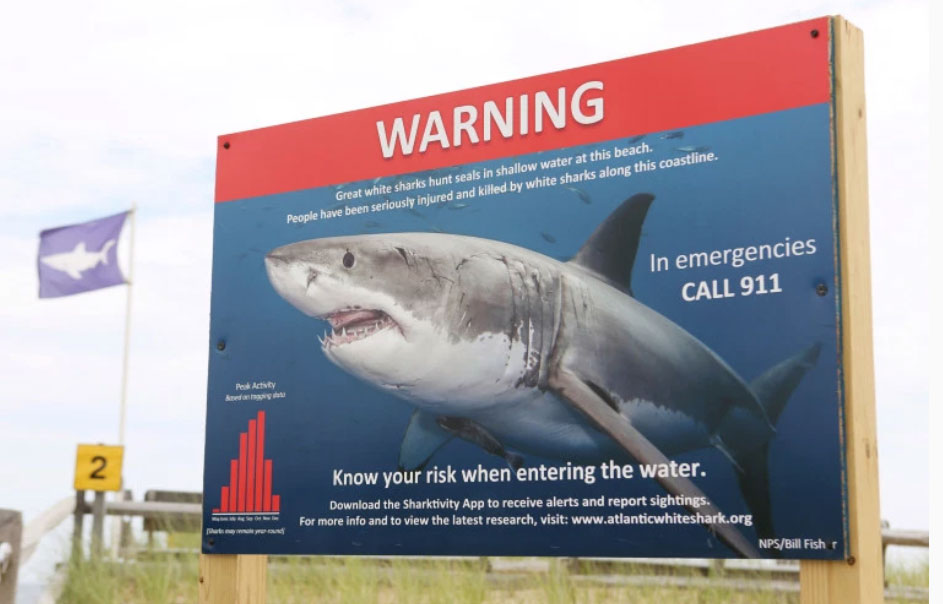
Who wants to go swimming?  The Great White Shark can detect blood in the water up to 3 miles away! mgw01-1_4Just look at those expensive teeth.

I watched several science programs regarding space and the Apollo 11 moon landing these past couple of weeks … and one the other night explainingplancktime the Big Bang theory and physical laws of nature as it relates to density and time. It was impossible to get my head around the concepts being discussed such as infinite density, planck time and cosmic inflation. For the entire hour I listened to brilliant scientists explain what they think they understand about the creation of the universe.  As usually happens, the entire learning experience had me feeling significantly smaller than I did before. It also reinforced my Christian belief in intelligent design (lower case) and added fuel to a Case for a Creator.

1920px-CMB_Timeline300_no_WMAP

Of course I regularly have the same thoughts regarding this “pin-prick in the universe” that is planet Earth. It would be harder to believe that the amazing complexity of creation and our entire life-sustaining environment (as well as everything else in space) evolved from one high density energy blast of matter all  “by chance.”  That is a far more difficult of a hypothesis than to accept there is a Creator who “intelligently” brought it all into existence from a realm that humans in our current finite form cannot comprehend. As for shark photo and creating them… “God created the great creatures of the sea and every living thing with which the water teems and that moves about in it.” (Genesis 1:21)

A story with 2 of my favorite subjects – photography and space

Posted By on July 27, 2019

NASAApollo11Moon690720

A lot of things needed to go right when NASA sent three astronauts rocketing towards the moon in July of 1969 … but one real close call happened after their safe return to earth. It seems, some of the iconic photographs were “almost lost to posterity,” explains Zeiss, the company that provided the lenses for Apollo 11.

339971main_pg63_as11-40-5878_full_thumbAccording to Zeiss, “before the moon photos were developed, the processing equipment was checked one more time with a test film,” just to be sure everything was correct. “During this inspection the film processor suddenly started leaking ethylene oxide, destroying the test film. The development team quickly fixed the defect and successfully develop the images.”  LINK

The photos potentially that could have been damaged was the one Neil Armstrong took of Buzz Aldrin (with his reflection in the visor) and the famous boot print on the moon! Imagine never having those photos due to a processing glitch back on earth?

It does remind me of the many times I took “relatively important” one time event photos and headed to the darkroom to process the film. I can recall rolling film “in complete darkness” onto the stainless steel spools hoping the film wasn’t accidently stuck together without a little gap for chemicals. Roll35mmFilmThen again hoping the processing chemicals were all fresh and that the timer worked correctly as I “multi-tasked” trying to remember to agitate the processing tank correctly. Yes, there were close calls and mistakes … but nothing like a moon landing!

flmrollingspoot

dixons-35mm-stainless-steel-dev-tank-and-spiral-4573-p[ekm]500x375[ekm]

Tech Friday: Quantum computing and cryptography

Posted By on July 26, 2019

The race for quantum computing superiority has been on my mind and in my discussions lately. State actors like China, North Korea and Russia are all running projects sponsored by their governments to be the first to harness such computing power that will make today’s encryption nearly worthless. Here in the US, our biggest tech companies are independently doing the same … who will lead is anyone’s guess.

For today’s Tech Friday post, here’s an “Explainer” from MIT Technology Review.

Explainer: What is post-quantum cryptography?

Few of us give much thought to the tiny padlock symbol that appears in our web browsers every time we use an e-commerce site, send and receive emails, or check our bank or credit card accounts. But it’s a signal that the online services are using HTTPS, a web protocol that encrypts the data we send across the internet and the responses we receive. This and other forms of encryption protect all kinds of electronic communications, as well as things like passwords, digital signatures, and health records.

Quantum computers could undermine these cryptographic defenses. The machines aren’t powerful enough to do this today, but they are evolving fast. It’s possible that in a little more than a decade—and perhaps even sooner—these machines could be a threat to widely used cryptography methods. That’s why researchers and security firms are racing to develop new approaches to cryptography that will be able to withstand future quantum attacks mounted by hackers.

How does digital encryption work?

There are two main types of encryption. Symmetric encryption requires a sender and a receiver to have identical digital keys to encrypt and decrypt data, whereas asymmetric—or public-key—encryption uses a publicly available key to let people encrypt messages for a recipient who is the sole holder of the private key needed to unscramble them.

Sometimes these two approaches are used together. In the case of HTTPS, for instance, web browsers use public-key cryptography to check websites’ validity and then establish a symmetric key to encrypt communications.

The goal is to stop hackers from using massive amounts of computing power to try to guess the keys being used. To do this, popular cryptography methods, including one known as RSA and another called elliptical curve cryptography, typically use so-called trapdoor functions—mathematical constructs that are relatively easy to compute in one direction to create keys, but are very hard for an adversary to reverse-engineer.

Hackers could try to break a code by trying all possible variations of a key until one works. But defenders make life really hard for them by using very long key pairs—like the RSA 2,048-bit implementation, which renders a key that is 617 decimal digits long. Running through all the possible permutations to derive the private keys could take many thousands—if not millions—of years on conventional computers.

Why are quantum computers a threat to encryption? (more…)

Desultory - des-uhl-tawr-ee, -tohr-ee

  1. lacking in consistency, constancy, or visible order, disconnected; fitful: desultory conversation.
  2. digressing from or unconnected with the main subject; random: a desultory remark.
My Desultory Blog