Posted By RichC on November 16, 2019
Here’s a WIRED article that made me think … although it has a misleading title line, even if that is what caught my attention and started me reading it.
When does user-friendliness, algorithms and anticipatory artificial intelligence that is designed to help us make decisions, end up becoming "I don’t need to think at all" or eventually sap our free-will to think, plan and make decisions?
Call me old, but I don’t want too much more of this “helping” me in my life.
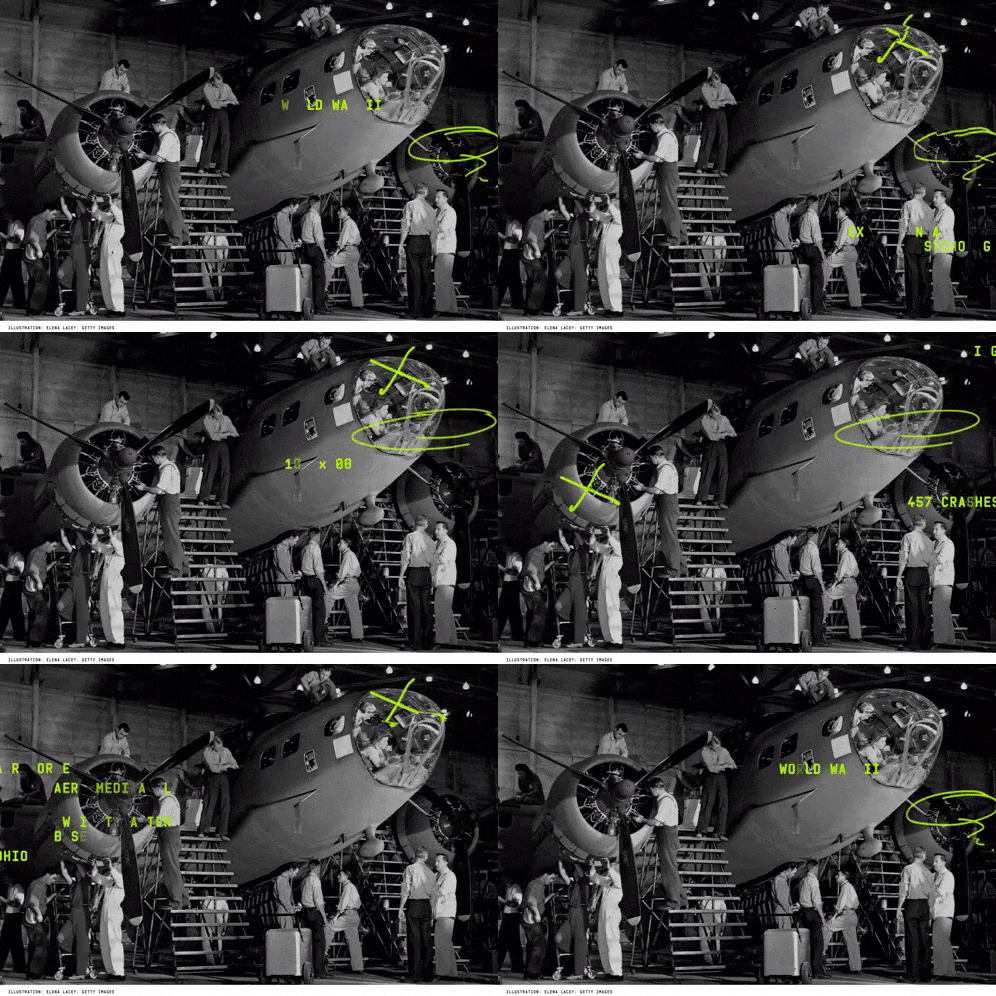
How the Dumb Design of a WWII Plane Led to the Macintosh
At first, pilots took the blame for crashes. The true cause, however, lay with the design. That lesson led us into our user-friendly age—but there’s peril to come.
The B-17 Flying Fortress rolled off the drawing board and onto the runway in a mere 12 months, just in time to become the fearsome workhorse of the US Air Force during World War II. Its astounding toughness made pilots adore it: The B-17 could roar through angry squalls of shrapnel and bullets, emerging pockmarked but still airworthy. It was a symbol of American ingenuity, held aloft by four engines, bristling with a dozen machine guns.
Imagine being a pilot of that mighty plane. You know your primary enemy—the Germans and Japanese in your gunsights. But you have another enemy that you can’t see, and it strikes at the most baffling times. Say you’re easing in for another routine landing. You reach down to deploy your landing gear. Suddenly, you hear the scream of metal tearing into the tarmac. You’re rag-dolling around the cockpit while your plane skitters across the runway. A thought flickers across your mind about the gunners below and the other crew: "Whatever has happened to them now, it’s my fault." When your plane finally lurches to a halt, you wonder to yourself: "How on earth did my plane just crash when everything was going fine? What have I done?"
For all the triumph of America’s new planes and tanks during World War II, a silent reaper stalked the battlefield: accidental deaths and mysterious crashes that no amount of training ever seemed to fix. And it wasn’t until the end of the war that the Air Force finally resolved to figure out what had happened.
To do that, the Air Force called upon a young psychologist at the Aero Medical Laboratory at Wright-Patterson Air Force Base near Dayton, Ohio. Paul Fitts was a handsome man with a soft Tennessee drawl, analytically minded but with a shiny wave of Brylcreemed hair, Elvis-like, which projected a certain suave nonconformity. Decades later, he’d become known as one of the Air Force’s great minds, the person tasked with hardest, weirdest problems—such as figuring out why people saw UFOs.
Read more at WIRED (also archived below)
(more…)
Category: Archive, Business, Human Interest, Innovation, Misc |
No Comments »
Tags: ai, algorithms, article, artificial intelligence, b-17, decisions, design, macintosh, steve jobs, user friendly, wired, ww2
 I spent the weekend wasting time reorganizing, sorting and cleaning up my woodworking workshop this past weekend and realizing I have a few older “semi-collectable” tools that I really should comment on … or as Brenda says, write my notes down in a book while I can still remember things.